
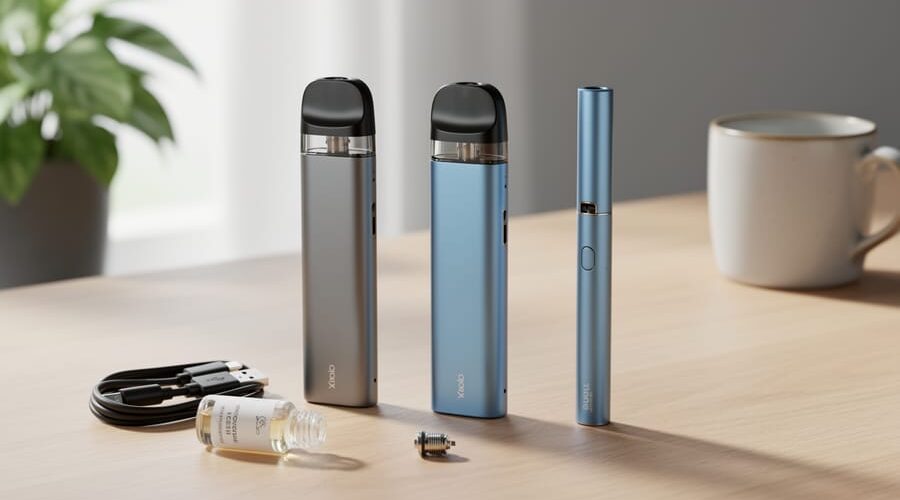
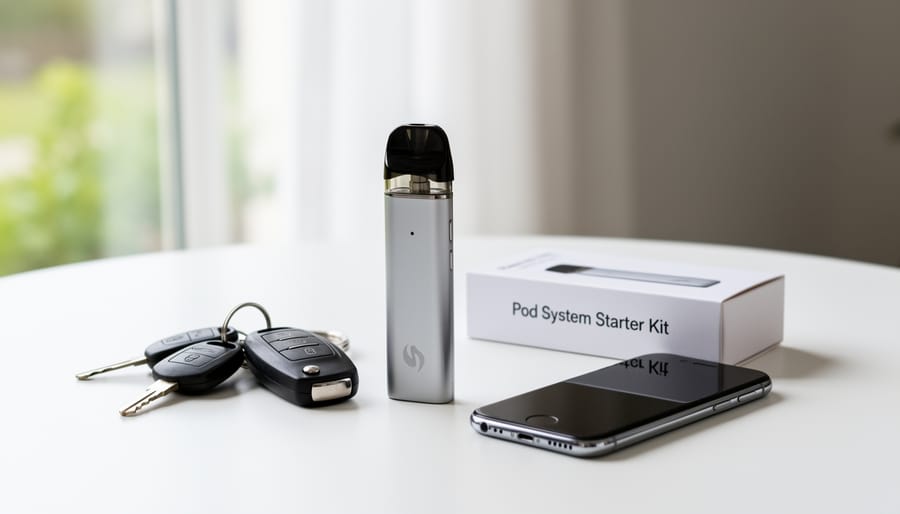
Start with pod systems or vape pens rather than complex box mods—these devices require no technical knowledge, come ready to use, and cost between $20-40, making them the perfect entry point for anyone transitioning from cigarettes or exploring vaping for the first time. Pod systems like the Vaporesso XROS or Caliburn series offer automatic draw activation (just inhale like a cigarette), refillable pods that last 1-2 weeks, and built-in batteries you simply charge via USB-C.
Choose nicotine salt e-liquids in 20-35mg strength if you’re a current smoker seeking throat hit satisfaction, or opt for 3-6mg freebase nicotine if you prefer larger vapor clouds and smoother draws. Nicotine salts absorb faster and satisfy cravings more efficiently in smaller devices, while freebase works better in higher-powered equipment you’ll explore later.
Prioritize devices with replaceable coils or pods rather than fully disposable units—this reduces your ongoing costs from $8-10 per day for disposables to roughly $15-20 per week for e-liquid and replacement coils. Look for starter kits that include everything: the device, charging cable, spare coil, and detailed instructions.
Avoid adjustable wattage devices initially since they require understanding ohm’s law, coil resistance, and power curves. Your first device should have zero learning curve—fill the pod, wait five minutes for the coil to saturate, and start vaping. You’ll naturally progress to advanced devices once you understand your preferences for vapor production, flavor intensity, and nicotine delivery.
Understanding What Makes a Vaping Kit ‘Beginner-Friendly’
When you’re browsing vaping products online or in a store, you’ll quickly notice that some devices are marketed specifically for beginners while others are labeled as advanced or intermediate. This distinction isn’t just marketing speak—there are genuine differences that can make or break your first vaping experience.
A truly beginner-friendly vaping kit prioritizes simplicity above all else. These devices are designed to work straight out of the box with minimal setup required. You shouldn’t need to understand electrical resistance, wattage curves, or complex menu systems just to take your first puff. The best starter kits feature intuitive operation—often as simple as filling the tank and pressing a button, or in some cases, just inhaling to activate the device automatically.
Ease of use extends beyond initial setup. Beginner devices typically have straightforward refilling mechanisms that don’t require you to disassemble multiple components or watch tutorial videos. The coils (the heating elements that need periodic replacement) should be simple to change, ideally with a twist-and-lock design rather than complicated rebuild processes that advanced users tackle.
Reliability matters tremendously when you’re starting out. A temperamental device that leaks, produces inconsistent vapor, or requires constant tinkering will frustrate you and potentially send you back to smoking. Quality beginner kits from reputable manufacturers undergo testing to ensure consistent performance and include basic safety features like overcharge protection and short-circuit prevention.
Low maintenance is another hallmark of beginner-friendly devices. You’ll want something that doesn’t demand daily cleaning rituals or frequent part replacements. Starter kits generally use pre-built coils that last one to three weeks depending on usage, and their simple construction means fewer components that can malfunction or require attention.
The key difference between beginner and advanced devices boils down to customization versus convenience. Advanced mods offer extensive control over power output, temperature, and airflow settings—features that experienced vapers appreciate but newcomers find overwhelming. When you’re just starting out, focus on devices that handle the technical aspects automatically, allowing you to concentrate on finding the right flavors and nicotine strength for your needs.
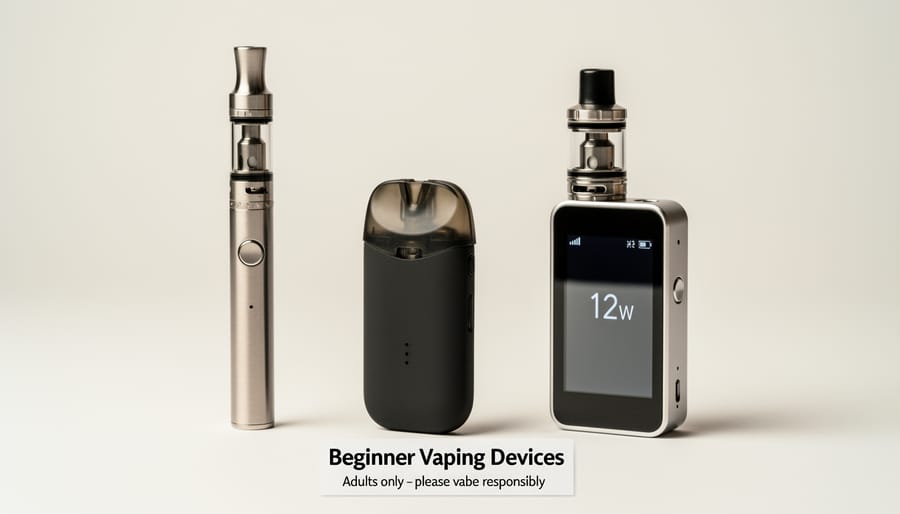
The Three Main Types of Beginner Vaping Kits
Pod Systems: The Simplest Starting Point
Pod systems have become the go-to choice for beginners, and for good reason. These compact devices strip away complexity while delivering a satisfying experience that closely mimics the draw of a traditional cigarette—making them particularly appealing if you’re transitioning from smoking.
There are two main types to consider. Closed pod systems use pre-filled pods that you simply snap into place and replace when empty. Think of them like coffee pods for your coffee maker—zero maintenance, zero mess. You don’t refill anything or adjust settings; just swap the pod when it runs out. Brands dominating this space have perfected the simplicity factor, which is why many smokers choose them as their first vaping device.
Open pod systems, also called refillable pods, give you more flexibility. You fill the pod yourself with your choice of e-liquid, which opens up thousands of flavor options and typically costs less over time. The trade-off? A bit more involvement—you’ll need to refill pods every day or two and replace them every week or two as the coil inside wears out.
Both types offer serious advantages for newcomers. They’re incredibly portable, often smaller than a lighter, and slip easily into any pocket. The draw-activated firing (no buttons to press) feels intuitive and natural. Most importantly, they deliver nicotine efficiently, which helps address cravings when you’re making the switch. While we should always consider relative health risks of any nicotine product, pod systems provide a straightforward path away from combustible tobacco.
Vape Pens: The Middle Ground
Vape pens represent a sweet spot for beginners who want something more substantial than a pod system without diving into complex box mods. These cylindrical devices typically feature slightly larger batteries (ranging from 1000mAh to 1600mAh), giving you longer usage between charges compared to most pod systems.
What makes vape pens appealing is their straightforward design paired with modest customization options. Many models allow you to adjust wattage within a beginner-friendly range, letting you find your preferred vapor warmth and cloud production without overwhelming you with settings. The button-activated firing mechanism gives you precise control over when you vape, unlike the draw-activated pods.
Vape pens shine for beginners who’ve moved past the initial transition phase and want to experiment with different vaping styles. They work well with both nicotine salt and freebase e-liquids, depending on the coil resistance you choose. The larger tank capacity (usually 2ml to 3ml) means fewer refills throughout the day, making them practical for regular use.
These devices typically produce more vapor than pod systems, which some users prefer for the fuller sensory experience. However, this increased vapor production means they’re slightly less discreet for public vaping.
Maintenance involves changing coils every one to three weeks and occasional tank cleaning, but nothing too complicated. If you’re comfortable with basic device care and want adjustability without complexity, vape pens offer an excellent middle ground that can grow with you as you refine your vaping preferences.
All-in-One (AIO) Kits: Built-In Simplicity
All-in-One kits, commonly called AIOs, represent perhaps the most beginner-friendly option in vaping. These devices combine the battery, tank, and coil system into a single compact unit, eliminating the guesswork that comes with matching separate components. Think of them as the smartphone equivalent in the vaping world—everything you need in one sleek package.
The beauty of AIO devices lies in their simplicity. Unlike traditional setups where you need to screw a tank onto a battery mod and worry about compatibility, AIOs come pre-assembled and ready to use. You simply fill the integrated tank with e-liquid, charge the built-in battery, and you’re good to go. This streamlined design means fewer parts to lose, fewer connections to troubleshoot, and a much gentler learning curve for newcomers.
Maintenance is refreshingly straightforward with AIOs. Most models feature easy top-fill systems where you pop open a silicone plug or flip cap to add your e-liquid. When it’s time to replace the coil—typically every one to three weeks depending on usage—you’re usually dealing with simple plug-and-play coil heads that slot directly into the device without any disassembly.
AIOs make particular sense as a first purchase if you value portability and discretion. Their compact form factor slips easily into pockets, and many models are designed for mouth-to-lung vaping, which closely mimics the draw of traditional cigarettes. They’re ideal for former smokers seeking a familiar experience without the complexity of advanced systems.
What Should Actually Be Included in Your Starter Kit
When you’re evaluating a beginner vaping kit, knowing what should actually be in the box can save you from frustration and unexpected expenses. A quality starter kit should arrive ready to use with just minimal setup, meaning you shouldn’t need to make multiple additional purchases before your first vape. Let’s break down what you should expect to find and why each component matters.
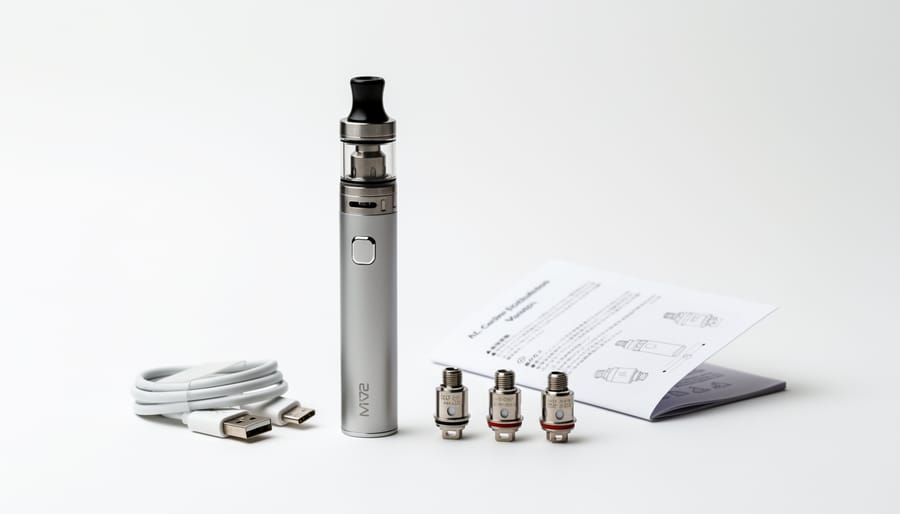
At minimum, every complete beginner kit should include:
- The vaping device itself (sometimes called the mod or battery unit)
- At least one tank or pod already attached
- A USB charging cable compatible with your device
- At least one replacement coil (ideally two or more)
- A detailed user manual with safety instructions
- Warranty information and registration details
The device and tank are obvious essentials, but those replacement coils are critical because coils wear out typically every one to three weeks depending on usage. Having spares means you won’t be caught off guard when your first coil needs changing. If a kit only includes one coil that’s already installed, consider that a red flag since you’ll need to order replacements almost immediately.
The charging cable should match your device’s charging port. Most modern devices use USB-C, though some older or budget models still use micro-USB. Check whether the kit includes a wall adapter or just the cable. If it’s cable-only, you’ll need a compatible wall plug or plan to charge via computer, which is perfectly fine but good to know ahead of time.
Better quality kits often include bonus items that enhance your experience. These might include extra o-rings (the small rubber seals that prevent leaks), a drip tip cover for hygiene, or even a small bottle of e-liquid to get you started. While these extras are nice, they’re not deal-breakers if absent.
What you won’t find in the kit is e-liquid itself, since regulations in many regions require these to be sold separately. Budget accordingly because you’ll need to purchase this before you can actually use your device. Similarly, if you’re buying a device with external batteries rather than an internal rechargeable one, those batteries and potentially an external charger will be separate purchases.
Key Features to Look For (And Which Ones Don’t Matter Yet)
When you’re starting out with vaping, it’s easy to get lost in specification sheets filled with numbers and technical terms. The good news? Most of those specs don’t matter much when you’re just beginning. Let’s break down what actually matters and what you can safely ignore for now.
Battery capacity is one feature you should pay attention to. Measured in milliamp hours (mAh), this tells you how long your device will last between charges. For beginners, look for something with at least 1000mAh—this should get most people through a full day of moderate use. Built-in batteries are simpler since you just plug them in to charge, while removable batteries require purchasing separate batteries and an external charger. Stick with built-in batteries initially unless you’re confident you want the extra flexibility.
Coil resistance, measured in ohms, determines how your device vapes. You’ll see numbers like 0.8Ω or 1.2Ω. Higher resistance coils (above 1.0Ω) produce cooler vapor and work well with nicotine salt e-liquids, making them ideal for mouth-to-lung vaping that mimics cigarette smoking. Lower resistance coils create warmer, bigger clouds. As a beginner, don’t overthink this—most starter kits come with appropriate coils already included, and you can experiment later once you understand your preferences.
Adjustable airflow is genuinely useful, even for beginners. This feature lets you control how much air mixes with the vapor, affecting both the draw sensation and vapor production. A tighter airflow feels more like smoking a cigarette, while open airflow creates bigger clouds. Having this adjustment option means your device can grow with you as you figure out what you enjoy.
Now for what you can ignore initially: Variable wattage and voltage adjustments sound important, but preset devices work perfectly fine for learning. Temperature control is an advanced feature that prevents dry hits, but modern beginner devices handle this automatically. Fancy display screens showing detailed statistics? Nice to have, but not necessary. Customizable LED lights? Purely cosmetic.
Don’t worry about terms like “sub-ohm capability” or “bypass mode” yet. These features cater to experienced vapers chasing specific experiences. Focus instead on finding something simple, reliable, and appropriately powered for your needs. You can always upgrade to more advanced devices once you’ve developed your preferences and understand what those extra features actually do. Remember, the best vaping device for a beginner is one that’s simple enough to use consistently without frustration.
Understanding E-Liquid Compatibility: What Can You Use?
One of the most confusing aspects for newcomers is figuring out which e-liquid works with which device. The good news? Getting this right isn’t complicated once you understand a few basics.
E-liquids consist primarily of two base ingredients that determine how they perform. Propylene Glycol (PG) delivers stronger throat hit and carries flavor better, while Vegetable Glycerin (VG) produces thicker clouds and offers smoother inhalation. The ratio between these ingredients matters significantly for device compatibility. Research on PG/VG aerosol effects helps us understand how these components behave differently when vaporized.
Here are the essential terms you’ll encounter:
- PG (Propylene Glycol)
- A thin liquid that provides throat hit similar to cigarette smoking and carries flavor effectively. Higher PG ratios work best in lower-powered devices.
- VG (Vegetable Glycerin)
- A thicker, sweeter liquid that produces larger vapor clouds. Higher VG ratios require more powerful devices to vaporize properly.
- Nicotine Strength
- Measured in milligrams per milliliter (mg/ml), this indicates how much nicotine your e-liquid contains. Beginners typically start between 3-20mg depending on previous smoking habits.
- Freebase Nicotine
- Traditional nicotine form found in cigarettes, providing stronger throat hit at lower concentrations. Best suited for lower nicotine strengths (3-12mg) in sub-ohm devices.
- Nicotine Salt
- Chemically modified nicotine that absorbs more smoothly, allowing higher strengths (20-50mg) without harshness. Designed specifically for pod systems and mouth-to-lung devices.
Matching liquid to device is straightforward. Pod systems and starter kits with coils above 1.0 ohm work best with higher PG ratios (50/50 or 60/40 PG/VG) and nicotine salts. These thinner liquids wick efficiently in smaller devices and deliver satisfying nicotine absorption quickly—important if you’re transitioning from cigarettes, as noted in prescribing guidance for practitioners.
Sub-ohm devices with coils below 1.0 ohm require high VG liquids (70/30 or 80/20 VG/PG) and lower nicotine strengths (3-6mg freebase). The increased power vaporizes thicker liquid effectively while preventing overwhelming nicotine intake from larger vapor production.
Setting Your Budget: What to Expect to Spend
Understanding how much to invest in your first vaping setup helps you make informed decisions without overspending or buying something that won’t meet your needs. Let’s break down what you can realistically expect at different price points.
For entry-level beginner kits, you’re looking at spending between $20-40. These typically include basic pod systems or simple vape pens from reputable manufacturers. While these won’t have all the bells and whistles, they’re perfectly capable of delivering a satisfying experience for someone just starting out. The key here is buying from established brands rather than generic alternatives—that extra $10-15 often translates to better battery life, more reliable performance, and safer construction.
Mid-range options fall in the $40-70 range and generally offer better build quality, longer-lasting batteries, and more refined flavor production. These devices often include features like adjustable airflow and longer coil lifespan, which can actually save you money over time.
However, your initial device cost is just part of the equation. Budget for ongoing expenses too. Replacement coils typically cost $10-15 for a pack of three to five, lasting anywhere from one to three weeks each depending on your usage. E-liquid consumption varies, but most beginners use about 10-15ml weekly, costing roughly $10-20 depending on brand and quality.
When calculating value, consider the total monthly cost rather than just upfront price. A $25 device with coils that burn out weekly might actually cost more than a $50 kit with month-long coil life. Factor in approximately $40-60 monthly for replacement coils and e-liquid once you’re up and running. This helps you understand the true investment and choose a setup that fits your long-term budget.
Common Beginner Mistakes When Buying Your First Kit
Starting your vaping journey on the right foot means avoiding some common purchasing pitfalls that trip up many newcomers. Understanding these mistakes before you buy can save you money, frustration, and potentially a disappointing first experience that might discourage you from continuing.
One of the biggest errors beginners make is overestimating their needs and buying devices that are far too advanced. It’s tempting to think that a more powerful, feature-rich mod will give you a better experience, but complex devices with multiple wattage settings, temperature control, and customizable curves can be overwhelming when you’re just trying to figure out the basics. Start simple—you can always upgrade later once you understand what features actually matter to you.
Here are the most frequent mistakes new vapers make when purchasing their first kit:
- Choosing advanced mods with complicated settings instead of beginner-friendly pod systems or starter kits
- Selecting a device based purely on appearance without considering functionality or ease of use
- Ignoring the ongoing cost of replacement coils and pods
- Buying devices with proprietary coils that are expensive or hard to find locally
- Purchasing from unreliable sellers without checking reviews or authenticity guarantees
- Overlooking battery safety and buying cheap external batteries from unknown brands
- Failing to research e-liquid compatibility with their chosen device
Another common oversight is not researching coil availability before committing to a device. You might find an attractive vape kit at a great price, only to discover later that replacement coils are expensive, hard to source, or have been discontinued entirely. Always check that coils are readily available from multiple retailers and look at their cost—these will be your most frequent recurring expense.
Finally, many beginners skip reading authentic user reviews and rely solely on marketing materials or what looks coolest. Real-world feedback from other users, especially those who were also beginners, provides invaluable insights into reliability, ease of use, and whether a device actually delivers on its promises. Take time to research before you buy.
Where to Buy Your Beginner Vaping Kit
Choosing where to purchase your first vaping kit can significantly impact your experience as a beginner. Each buying channel offers distinct advantages and limitations worth considering.
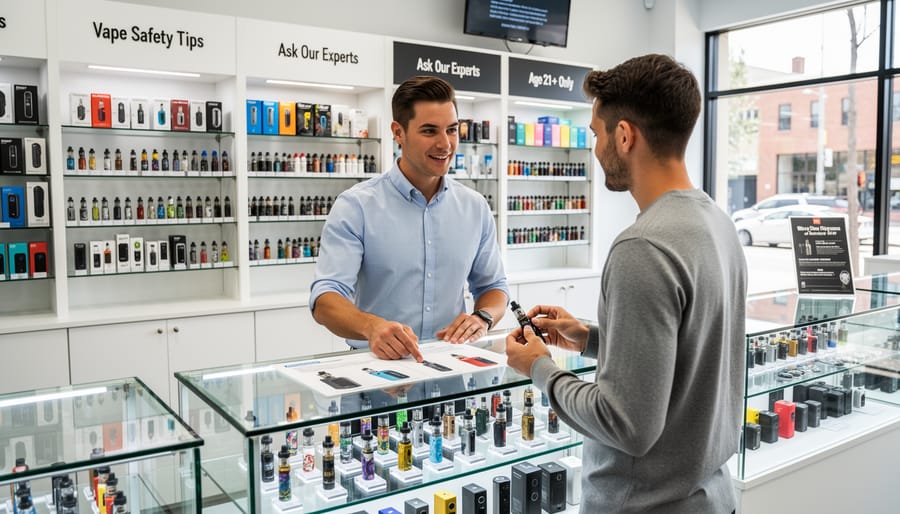
Local vape shops provide the most personalized experience for newcomers. Staff can demonstrate devices, answer questions in real-time, and help you understand proper usage before you leave the store. You’ll have the opportunity to see and feel different devices, which helps when choosing what feels comfortable in your hand. The main downside is potentially higher prices compared to online options, and product selection may be limited depending on your location.
Online retailers typically offer the widest selection and most competitive prices. You’ll find extensive product descriptions, customer reviews, and comparison tools that make research easier. Many reputable online stores provide detailed guides and responsive customer service through chat or email. However, you won’t get hands-on experience before purchasing, and shipping times mean you’ll wait a few days to start vaping. Always verify that online retailers are authorized sellers and check return policies carefully.
Convenience stores and gas stations might seem like easy options, but they usually stock limited, basic devices at markup prices. While acceptable in a pinch, these locations rarely offer knowledgeable staff or quality customer support.
Regardless of where you shop, prioritize reputable sources that sell authentic products with proper safety certifications. Counterfeit devices pose safety risks and perform poorly. Look for established businesses with good reviews, transparent product information, and clear warranty terms to ensure you’re getting genuine equipment and reliable support.
Starting your vaping journey doesn’t need to feel overwhelming. The key is keeping things simple at first. Rather than trying to find the “perfect” device right away, focus on getting a reliable, beginner-friendly kit that matches your current needs—whether you’re transitioning from smoking or simply curious about vaping.
A basic pod system or starter kit gives you everything necessary to begin without unnecessary complexity. These devices are designed specifically for people new to vaping, with straightforward operation and minimal maintenance. You’ll naturally discover your preferences as you use your first device—whether you prefer tighter or looser draws, more or less vapor, different nicotine strengths, or various flavors.
Think of your first vaping kit as a learning tool rather than a lifetime commitment. You’re not locked into one choice forever. Many vapers upgrade or try different devices after a few months once they understand what they enjoy most. That’s completely normal and expected.
The best first vaping kit is simply the one you’ll use consistently. If it’s too complicated, you won’t stick with it. If it’s unreliable, you’ll get frustrated. Choose something from a reputable manufacturer within your budget, follow the included instructions, and give yourself time to adjust. Your vaping experience will evolve naturally from there.